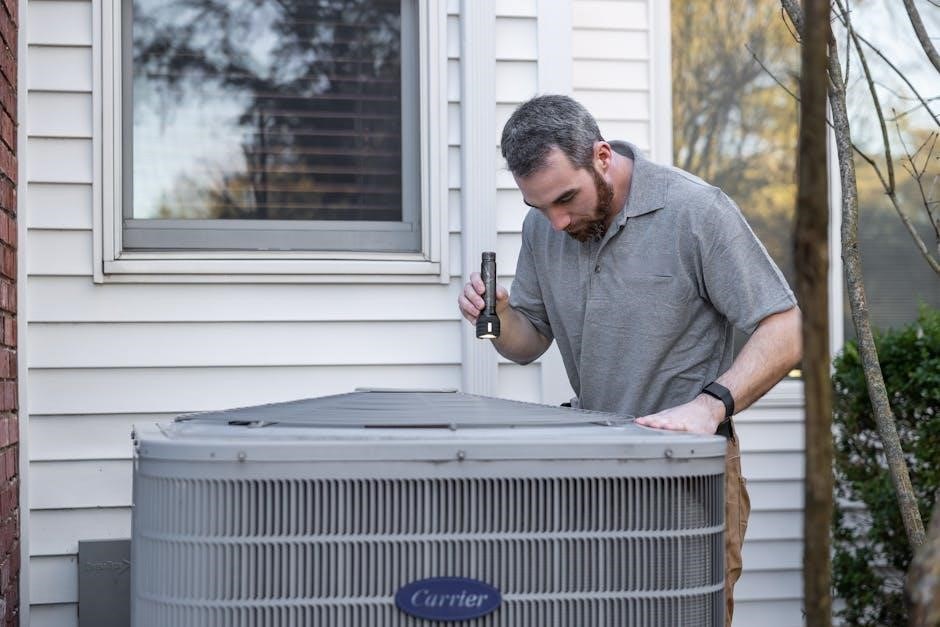
convair portable air conditioner manual
Convair Portable Air Conditioner Manual: A Comprehensive Guide
This comprehensive guide details safety, installation, operation, and maintenance for Convair portable air conditioners, including models like CM12RW and CP18CW1.
Convair offers a focused range of portable refrigerated air conditioners designed for convenient and efficient cooling. These units, like the CM12RW, provide a solution without complex installation. This manual serves as a guide to understanding your Convair appliance, covering everything from initial setup to troubleshooting.
Convair prioritizes user-friendly operation and energy-saving features, ensuring optimal performance and comfort. Explore this manual to maximize your cooling experience and maintain your unit effectively.
Understanding the CM12RW Model
The Convair CM12RW is a portable refrigerated air conditioner designed for localized cooling. This model, detailed in its instruction manual, offers features like multiple fan speeds and cooling modes. It’s built for ease of use, requiring only a window kit for exhaust.
Understanding the CM12RW’s components and controls, as outlined in this guide, will ensure efficient operation and optimal cooling performance. Familiarize yourself with its specifications for best results.
Key Features and Benefits
Convair portable air conditioners, like the CM12RW, boast several key features. These include efficient refrigerated cooling, multiple operating modes (cool, fan, dry), and adjustable fan speeds. A significant benefit is portability – easily move cooling where needed!
Furthermore, Convair units utilize a slimline design and offer energy-saving options. The absence of harmful refrigerant gases in evaporative coolers is a major advantage, providing fresh, clean air circulation.

Safety Precautions
Prioritize safety! This section details crucial instructions regarding electrical connections, proper operation, and general guidelines for your Convair portable air conditioner.
General Safety Instructions
Always disconnect the unit before cleaning or maintenance. Never operate with a damaged cord or plug. Avoid using extension cords; plug directly into a grounded outlet. Ensure adequate ventilation and keep the unit away from flammable materials. Do not insert objects through the vents. This appliance isn’t intended for use by persons (including children) with reduced physical, sensory, or mental capabilities, or lack of experience, unless supervised. Close supervision is necessary when the appliance is used near children.
Electrical Safety Guidelines
Ensure the power supply matches the unit’s requirements. Never operate the air conditioner with a wet plug or hands. Avoid using the unit during electrical storms. Do not modify the power cord or plug. If the power cord is damaged, it must be replaced by a qualified technician. Always unplug the unit when not in use or during maintenance to prevent electrical shock. Grounding is essential for safety; do not bypass it.
Operating Safety
Always ensure the unit is stable and on a level surface before operation. Do not obstruct the airflow in or out of the unit. Keep children and pets away from the air conditioner during operation. Never insert objects through the vents. Regularly check the exhaust hose for damage or blockage. Avoid operating the unit in extremely humid or dusty environments without proper filtration. Discontinue use if any unusual noises or smells occur.

Component Identification
Familiarize yourself with the air conditioner unit, control panel, and exhaust hose connectors for proper setup and efficient operation of your Convair system.
Air Conditioner Unit Overview
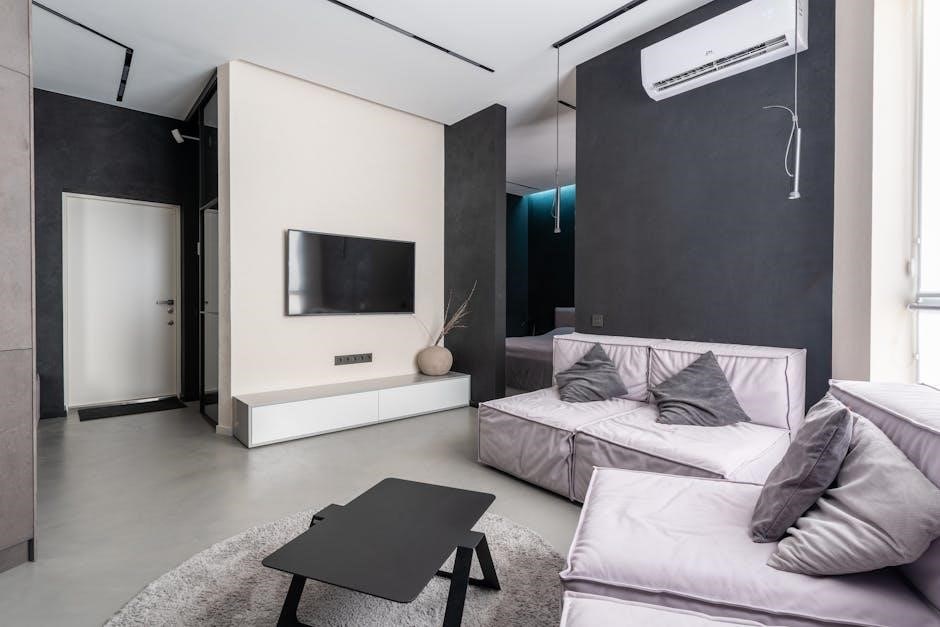
The Convair portable air conditioner is a self-contained unit designed for convenient cooling. It features a compact, slimline design for easy portability between rooms. Key components include the main unit housing the compressor and cooling system, a control panel for adjusting settings, and caster wheels for mobility.
The unit draws in warm air, cools it using refrigeration or evaporative technology (depending on the model), and exhausts warm air through the provided hose. Understanding these basic elements is crucial for effective use and maintenance.
Control Panel Explained
The control panel on your Convair portable AC allows for easy operation. It typically includes power buttons, mode selection (Cool, Fan, Dry), and temperature adjustment controls. Fan speed settings – often low, medium, and high – are also present. Some models feature a timer function for automated operation and potentially a display showing the set temperature.
Familiarize yourself with each button’s function to optimize cooling and energy efficiency. Refer to the specific model’s diagram for precise control locations.
Exhaust Hose and Connectors
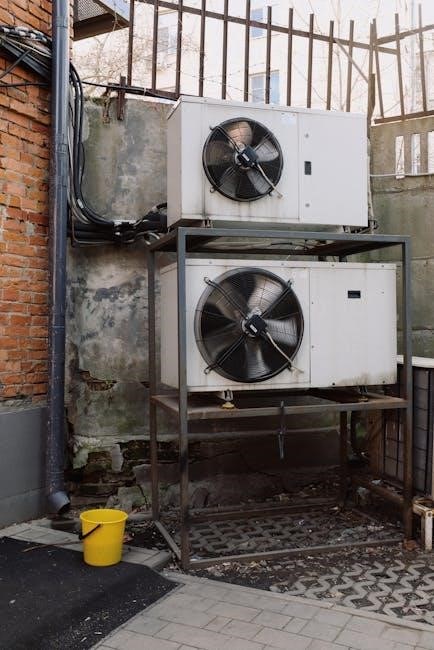
The exhaust hose is crucial for expelling hot air generated during the cooling process. It connects to the air conditioner unit and the window kit. Ensure a secure connection at both ends to prevent warm air from re-entering the room, diminishing cooling efficiency.
Inspect connectors for damage before each use. Proper installation, avoiding kinks or bends in the hose, is vital for optimal performance. A loose connection will reduce cooling capacity.

Installation Guide
Proper installation involves preparing the area, securely attaching the exhaust hose, and correctly installing the window kit for efficient operation.
Preparing for Installation
Before installation, choose a location near a window for exhaust hose venting and ensure sufficient space around the unit for optimal airflow. Verify the window can accommodate the provided window kit securely. Inspect all components – the air conditioner itself, exhaust hose, connectors, and window kit – for any damage. Clear any obstructions near the window and the intended placement of the unit to facilitate easy access for maintenance and operation. Confirm a grounded electrical outlet is readily available.
Installing the Exhaust Hose
Connect the exhaust hose to the rear of the air conditioner unit, ensuring a secure and airtight fit. Extend the hose to the window kit and attach it firmly, again verifying a tight seal to prevent hot air recirculation. Adjust the hose length as needed, avoiding sharp bends that could restrict airflow. Properly secure the hose within the window kit to maintain efficient cooling performance and prevent accidental disconnections during operation.
Window Kit Installation
Install the window kit into your desired window opening, adjusting the panels to fit snugly and securely. Ensure the kit is level and properly supported to prevent it from falling. Seal any gaps around the kit with foam or tape to maximize cooling efficiency and block outside air. The exhaust hose connects directly to the designated port within the window kit, completing the ventilation pathway. Proper installation is crucial for optimal performance.
Operating Instructions
Follow these steps to power on, select cooling modes (Cool, Fan, Dry), and adjust temperature and fan speed for comfortable and efficient operation.
Powering On and Off
To initiate operation, connect the unit to a grounded power outlet, ensuring the voltage matches the specifications. Press the power button on the control panel; a light indicator confirms activation. For shutdown, simply press the power button again. Allow a brief period for the fan to circulate air and complete the cooling cycle before disconnecting power. Always unplug the unit during extended periods of non-use or before performing maintenance. This ensures safety and prolongs the lifespan of your Convair portable air conditioner.
Mode Selection (Cool, Fan, Dry)
Convair units offer versatile modes: “Cool” lowers room temperature using refrigeration, “Fan” provides simple air circulation without cooling, and “Dry” functions as a dehumidifier, removing moisture. Select your desired mode via the control panel buttons. The “Cool” mode requires the exhaust hose to be properly installed. Adjust temperature settings within the “Cool” mode for personalized comfort. The “Dry” mode is ideal for humid environments, enhancing indoor air quality and comfort levels.
Temperature and Fan Speed Adjustment
Adjusting temperature and fan speed is simple using the control panel. The temperature can be set to your preferred level, typically ranging from 60°F to 85°F (16°C to 29°C). Fan speed offers multiple settings – Low, Medium, and High – to control airflow intensity. Higher fan speeds provide quicker cooling but may increase noise levels. Experiment to find the optimal balance between comfort and quiet operation for your specific needs and room size.
Maintenance and Care
Regular maintenance ensures optimal performance and longevity of your Convair unit; this includes cleaning filters, draining water, and general cleaning procedures.
Cleaning the Air Filter
Maintaining a clean air filter is crucial for efficient operation and air quality. Regularly inspect the filter – typically every two weeks with frequent use – and clean or replace it as needed. A clogged filter restricts airflow, reducing cooling performance and potentially damaging the unit.
Remove the filter carefully, following the instructions in your specific model’s manual. Wash reusable filters with mild soap and water, ensuring they are completely dry before reinstalling. Disposable filters should be replaced with a new one of the correct size.
Draining Water
During operation in cooling or dry mode, your Convair portable air conditioner collects condensation. Regularly draining this water prevents overflow and ensures optimal performance. Most models feature a drain plug or tank for easy removal. Consult your manual for the specific location and procedure for your unit.
Carefully remove the drain plug or tank, and dispose of the water responsibly. Ensure the unit is unplugged before draining. Some models may have a continuous drain option for unattended operation.
General Cleaning Procedures
To maintain peak performance, regularly clean the exterior of your Convair portable air conditioner with a damp cloth. Avoid harsh chemicals or abrasive cleaners, as these can damage the finish. Ensure the unit is unplugged before cleaning. Periodically wipe down the control panel and exhaust hose connections.
Inspect the unit for dust buildup and remove as needed. Proper cleaning extends the lifespan and efficiency of your air conditioner, ensuring consistent cooling.
Troubleshooting Common Issues
Resolve typical problems like cooling failures, water leaks, or error codes with this section’s guidance, ensuring optimal performance of your Convair unit.
Unit Not Cooling
If your Convair unit isn’t cooling, first ensure the air filter is clean; a clogged filter restricts airflow. Verify the exhaust hose is correctly installed and sealed, preventing warm air recirculation. Check if the unit is set to ‘Cool’ mode and the desired temperature is lower than the room temperature; Confirm the water tank isn’t empty, as some models require water for optimal cooling. Finally, inspect for any error codes displayed on the control panel, referencing the manual for specific solutions.
Water Leaks
Water leaks from your Convair portable AC often indicate improper drainage. Ensure the unit is positioned on a level surface to facilitate correct water flow to the drainage tank. Regularly drain the tank, avoiding overfilling. Inspect the drain hose for kinks or blockages. If leaks persist, check the unit’s seals and connections for damage. Some moisture during humid operation is normal, but significant leaks require attention to prevent water damage.
Error Codes and Solutions
Convair portable air conditioners utilize error codes to signal malfunctions. Consult your specific model’s manual for a complete list. Common codes may indicate sensor failures, compressor issues, or blocked airflow. Often, simply powering the unit off and on can reset minor errors. For persistent codes, check the air filter for blockage and ensure proper ventilation. If the problem continues, contact Seeley International customer support, referencing the error code for efficient assistance.

Energy Saving Tips
Maximize efficiency by optimizing airflow, ensuring proper insulation, and utilizing the built-in timer functions of your Convair portable air conditioner.
Optimizing Airflow
To enhance cooling performance, ensure your Convair portable air conditioner has unobstructed airflow. Keep the air filter clean, as a dirty filter restricts air intake, reducing efficiency. Avoid placing the unit directly against walls or furniture, allowing ample space for air circulation.
Close doors and windows in the room to contain the cooled air. Properly install the exhaust hose, ensuring a tight seal in the window kit to prevent warm air from re-entering the space. Regularly check for any blockages in the vents.
Proper Insulation
Effective insulation significantly reduces the workload on your Convair portable air conditioner, leading to energy savings. Seal any gaps around windows and doors with weather stripping or caulk to prevent air leaks. Insulate walls and ceilings to minimize heat transfer, keeping cool air contained within the room.
Consider using curtains or blinds to block direct sunlight during peak hours. A well-insulated space requires less cooling power, extending the life of your unit and lowering energy bills.
Using Timer Functions
Convair portable air conditioners often feature built-in timer functions for enhanced convenience and energy efficiency. Utilize the timer to automatically turn the unit on or off at pre-set times, aligning operation with your schedule. This prevents unnecessary cooling when the room is unoccupied.
Program the timer to start cooling before you arrive home, ensuring a comfortable environment without continuous operation. Explore the control panel for timer settings and customization options.
Technical Specifications
Detailed specifications, including model numbers (CP12CW3, CP18CW1, CM12RW), power requirements, and cooling capacity, are crucial for understanding your Convair unit.
Model Numbers and Variations (CP12CW3, CP18CW1, CM12RW)
Convair offers several portable air conditioner models, each designed for specific cooling needs. The CP12CW3 is a slimline refrigerated unit, while the CP18CW1 provides increased cooling capacity. The popular CM12RW model is also refrigerated. Understanding your specific model number—found on the unit itself—is vital for accessing the correct documentation and replacement parts. Variations may exist within these models, impacting features and performance, so referencing the exact model is always recommended for accurate information and troubleshooting.
Power Requirements
Convair portable air conditioners require a standard electrical outlet, typically 115V/60Hz. However, specific amperage draw varies by model. The CP12CW3 and CM12RW generally require a 15-amp circuit, while the CP18CW1, with its higher cooling capacity, may necessitate a dedicated 20-amp circuit. Always verify the power requirements listed on the unit’s data plate before plugging it in. Using an extension cord is discouraged; if necessary, use a heavy-duty cord rated for the appliance’s amperage.
Cooling Capacity
Convair portable air conditioners offer varying cooling capacities measured in BTUs (British Thermal Units). The CM12RW model typically provides 12,000 BTU, suitable for rooms up to 350-400 square feet. The CP18CW1 boasts a higher 18,000 BTU output, effectively cooling larger spaces of 450-550 square feet. Cooling performance depends on factors like room insulation, window efficiency, and set temperature. Ensure the selected model’s BTU rating aligns with the room size for optimal cooling efficiency.
Finding Your Convair Manual Online
Locate your Convair manual easily through search engines or websites like Manua.ls, offering a collection of 11+ Convair appliance manuals.
Utilizing Search Engines
Effectively finding your Convair portable air conditioner manual online begins with strategic search engine use. Input “Convair” alongside the specific model number – for example, “Convair CM12RW manual” or “Convair CP12CW3 instruction manual”.
Refine your search by adding terms like “PDF”, “download”, or “user guide” to pinpoint direct links to the manual.
Browsing through the search results will likely lead you to the official Seeley International website or manual repository sites offering downloadable resources.
Manua.ls Website
Manua.ls serves as a valuable online resource for locating Convair portable air conditioner manuals. Currently, the website hosts 11 different Convair manuals, offering a centralized location for users seeking documentation.
Simply navigate to Manua.ls and utilize the search function, entering “Convair” and your specific model number (e.g., CM12RW, CP18CW1) to quickly find the corresponding manual.
This platform provides easy access to downloadable PDF versions of the manuals.
Contact Information
For assistance, reach Seeley International (Convair) at 419-866-6301 or 800-426-6301. Explore their customer support resources online for further help.
Seeley International Phone Numbers (419-866-6301, 800-426-6301)
Need direct support? Seeley International, the parent company of Convair, offers dedicated phone lines for product inquiries and assistance. You can reach them at 419-866-6301 for localized support or utilize the toll-free number, 800-426-6301, for broader assistance across the country.
These lines are staffed to help with troubleshooting, parts requests, warranty claims, and general questions regarding your Convair portable air conditioner. Be prepared to have your model number handy for efficient service.
Customer Support Resources
Beyond phone support, Convair provides several resources for customers needing assistance with their portable air conditioners. Manua.ls is a valuable online platform hosting numerous Convair manuals, simplifying access to documentation. Utilize search engines, specifically searching “Convair” plus your model number, to locate relevant guides.
Grays Australia occasionally lists Convair units, potentially offering forum access or related support communities. These resources supplement Seeley International’s direct support channels, ensuring comprehensive assistance.

Understanding Refrigerant-Free Cooling
Convair evaporative coolers utilize water and fresh air for cooling, eliminating harmful refrigerant gases and recirculated odors for a healthier environment.
Evaporative Cooling Technology
Convair employs evaporative cooling, a natural process mimicking how sweat cools the body. This technology draws in fresh air, passing it through water-soaked cooling pads. As water evaporates, it absorbs heat, significantly lowering the air temperature. Unlike traditional air conditioners, this method doesn’t rely on refrigerants, offering an eco-friendly alternative. The result is consistently cool, 100% fresh air, free from recirculated contaminants, germs, and unpleasant odors, becoming more effective as outdoor temperatures rise.
Benefits of Fresh Air Circulation
Convair portable evaporative coolers prioritize fresh air intake, a key advantage over recirculating systems. This eliminates the risk of circulating stale, potentially harmful fumes, allergens, or odors. The continuous supply of fresh air enhances indoor air quality, promoting a healthier and more comfortable environment. As temperatures increase, evaporative cooling becomes even more effective, delivering substantial cooling without compromising air purity – a benefit for overall well-being and a refreshing indoor climate.
Leave a Reply
You must be logged in to post a comment.